|
|
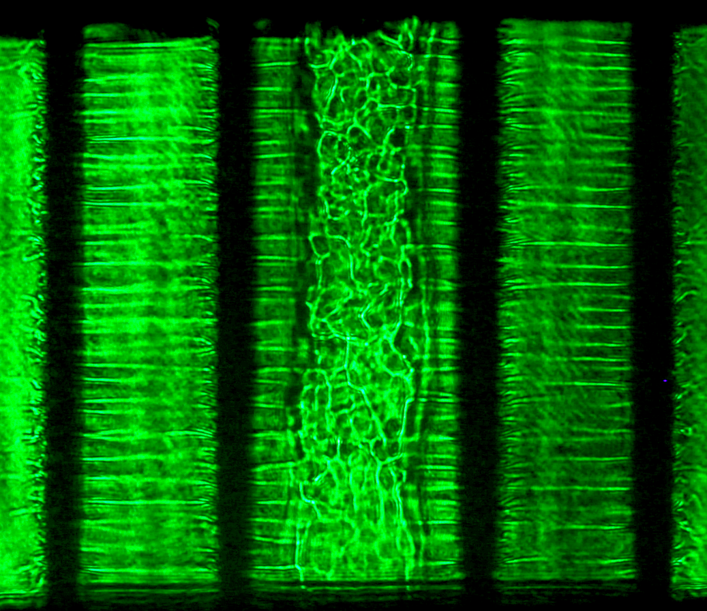
Fundamental Plasma Physics Experiments on PUFFINPosting Date9/01/23 Researcher NameProf. Jack Hare Researcher/Contact EmailDepartment/DivisionNSE Position TypePhD Student Position DescriptionThe new PUFFIN pulsed-power generator under construction at MIT will enable us to tackle a new frontier of high-energy-density laboratory astrophysics, using long current pulses to produce hot, dense, fast-moving and magnetized plasmas in a quasi-steady state. Using plasma diagnostics such as laser-imaging Mach-Zehnder interferometry, ultra-high-speed framing cameras and Thomson scattering, we will study the evolution of centimeter-scale, micro-second lifetime plasmas in order to understand fundamental plasma physics processes such as magnetic reconnection, magnetized turbulence, magnetized shocks, astrophysical jets, magneto-hydrodynamic instabilities, and creating hypersonic flows. This research informs both astrophysical plasmas (through dimensionless scaling) and the underlying physics of magnetized-target-fusion concepts. Students in the PUFFIN group will help with the design, construction and commissioning of PUFFIN and its diagnostics, as well as visiting other pulsed-power facilities world-wide to carry out research. This is a generic listing which covers a range of possible projects depending on which grants are funded. Interested students are advised to consult the FAQ at https://puffin.mit.edu/work-with-us/ Position Start DateFall 2024 |
|
|
A hands-on experimental Master's projectPosting Date8/22/23 Researcher NameJoshua Stillerman Researcher/Contact Emailjas@mit.edu Department/DivisionPlasma Science and Fusion Center Position TypeMasters Student Position DescriptionThis project will create an end-to-end demonstration of the plasma control system toolkit being developed at MIT to control a small, levitated magnet system. This device provides a convenient, low cost, low risk proxy for the control system requirements of a tokamak. It provides a vehicle for exploring system modeling, algorithm development, supervisory control, and the training and real-time operation of machine learning based diagnostics and controllers. It is a proof-of-principle for the toolkit, exercising all the major architectural components of a tokamak control system apart from the specific physics and diagnostics. Position Start Date9/1/23 |


Plasma Science and Fusion Center
Massachusetts Institute of Technology
77 Massachusetts Avenue, NW17
Cambridge, MA 02139
info@psfc.mit.edu
Accessibility